
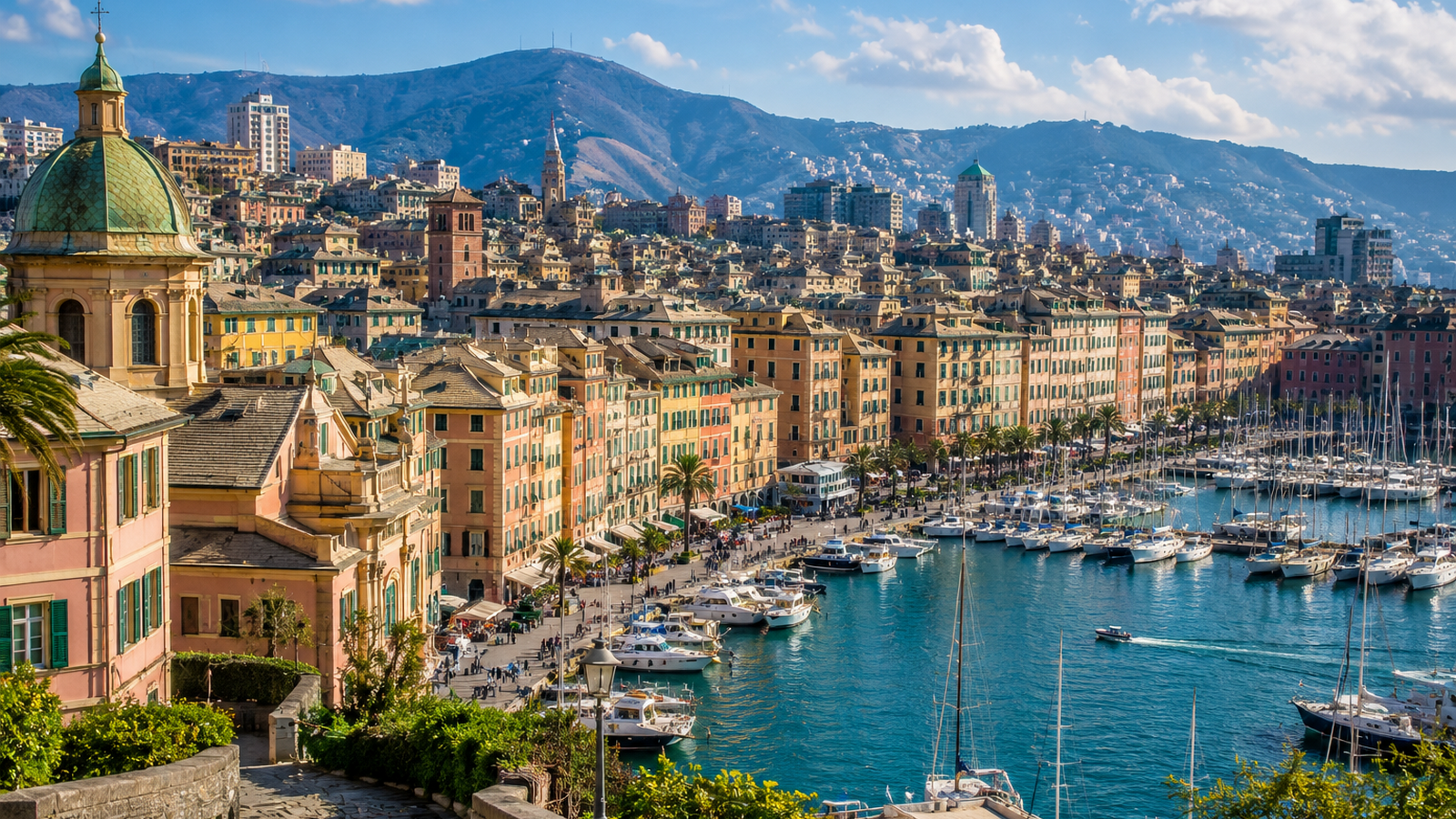
While Rome, Venice, and Florence continue to dominate Italy’s tourism landscape, Genoa is increasingly attracting travelers looking for a more authentic and less crowded Italian experience.
Located on the Ligurian coast, the historic port city offers a unique combination of maritime heritage, medieval architecture, narrow alleyways, and vibrant local culture. Unlike Italy’s heavily visited tourist hotspots, Genoa provides a slower and more local atmosphere, appealing to travelers seeking authenticity over mass tourism.
The city is known for one of Europe’s largest historic old towns, filled with hidden piazzas, historic palaces, churches, and traditional trattorias. Its maritime identity remains central to daily life, with the harbor continuing to shape the city’s economy and culture.
Genoa is also gaining attention as a gateway to the Italian Riviera and nearby coastal destinations such as Portofino and Cinque Terre, while offering lower prices and fewer crowds than many other Italian cities.
Tourism experts note that changing travel trends are benefiting destinations like Genoa, as more visitors prioritize local experiences, food culture, and slower travel over checklist-style sightseeing.
The city’s culinary scene is another major attraction. Genoa is considered the birthplace of pesto and is renowned for fresh seafood, focaccia, and Ligurian cuisine.
As overtourism pressures continue to affect Europe’s most famous cities, Genoa is emerging as an example of how secondary destinations can attract modern travelers looking for a more balanced and immersive Italian journey.