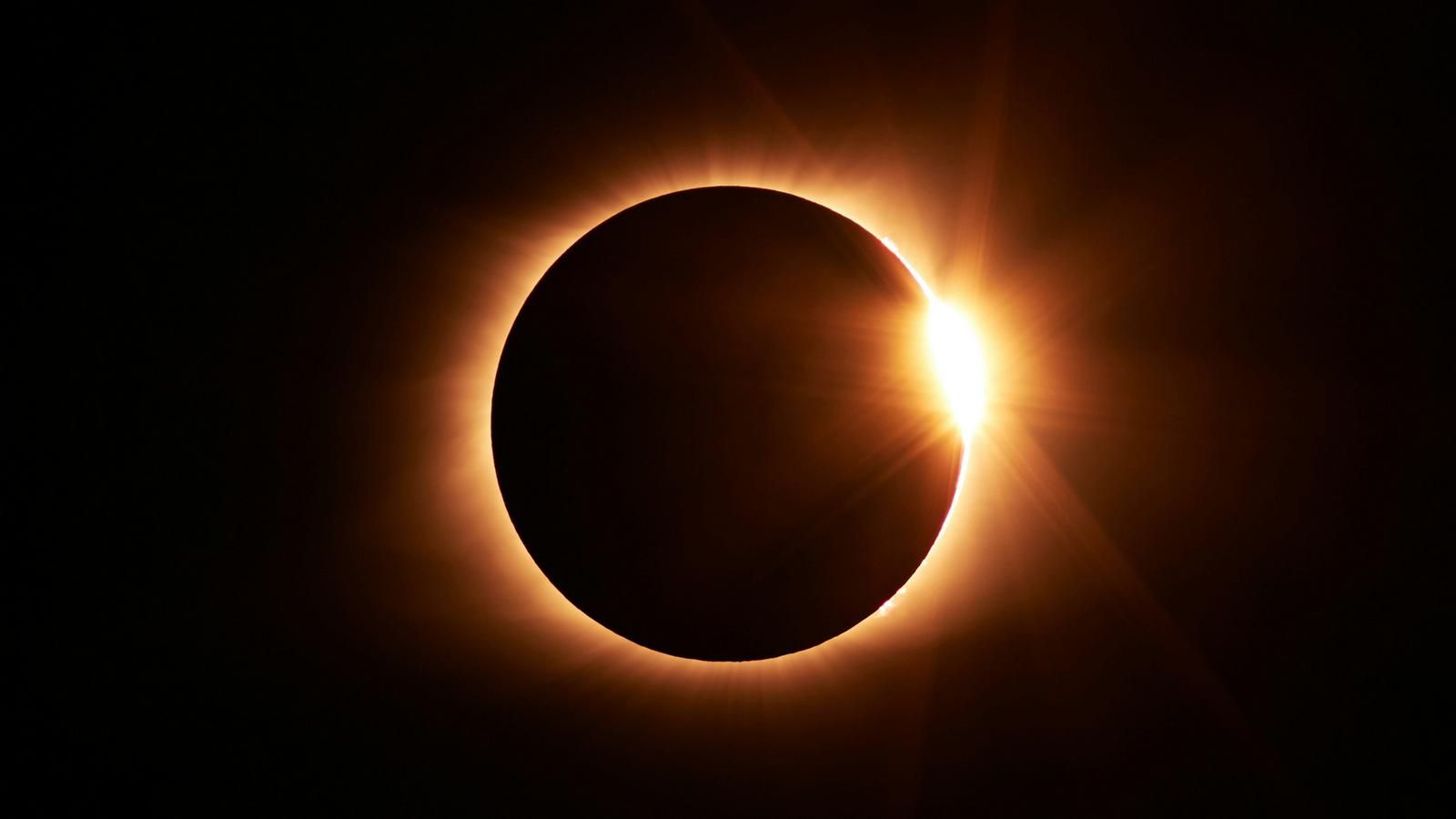
There are moments when nature becomes the most powerful tourism marketer in the world. No advertising campaign, destination slogan or social media strategy can quite compete with the moment when the Moon moves across the Sun and, for a few extraordinary minutes, turns daylight into darkness.
On 12 August 2026, Europe witnessed one of those moments. The total solar eclipse crossed the Arctic, Greenland, Iceland and the Atlantic before reaching northern Spain and a small part of Portugal. At the point of greatest duration, totality lasted just over two minutes. The astronomical spectacle was brief. Its impact on tourism was considerably longer.
And the numbers tell an interesting story. Before the eclipse, the Spanish government estimated that the event would bring 446,700 additional visitors to the 36 provinces affected by the path of totality and surrounding areas during the week of 10–16 August. The expected additional tourist spending was estimated at €342.19 million, with a net contribution to the Spanish economy of €347.6 million.
The warning signs had already appeared in the booking data. Hotel reservations for August were 17.8% higher than in August 2025, while the number of scheduled airline seats for the eclipse week increased by 7.9% year on year.
And then the Moon arrived.
Spain experienced an extraordinary influx of visitors. Reuters reported that the eclipse drew up to six million people to rural viewing areas and locations along the eclipse path, while more than 450,000 additional tourists were reported to have arrived in Spain. For some destinations, this was not simply another busy August day. It was a tourism phenomenon.
Hotels in cities such as A Coruña and Bilbao were reported to be fully booked, while smaller rural destinations along the eclipse route experienced an exceptional increase in demand. Earlier Airbnb data had already shown that reservations in non-urban destinations along the eclipse path had multiplied several times compared with 2025, with some rural areas recording increases of up to ten times.
This is perhaps the most interesting part of the story. The eclipse did not simply bring more tourists to Spain. It helped redistribute tourism. Instead of concentrating visitors exclusively in Barcelona, Madrid or the Mediterranean resorts, the phenomenon encouraged travellers to search for rural landscapes, small towns and less familiar parts of the country — places that normally have to spend millions promoting themselves.
For a few minutes, the Sun did the marketing for them.
Iceland experienced a similar phenomenon, although on a smaller scale. The eclipse was the first total solar eclipse visible from Iceland since 1954, and the first visible from Reykjavík since 1433. Up to 80,000 visitors were drawn to the country for the event.
The pressure was visible even before the eclipse. Hotel prices in Reykjavík reportedly rose by more than 140%, while accommodation prices in parts of Spain also increased sharply. And this is where the beautiful astronomical story acquires a very earthly dimension.
A total eclipse lasts only minutes. But airports, hotels, roads, restaurants, police, emergency services and local administrations have to deal with the visitors for days. In Iceland, authorities warned that roads, parking areas, campsites and public services could come under significant pressure. Additional measures were also taken to strengthen telecommunications infrastructure in areas expecting large concentrations of visitors.
Spain faced an even larger logistical challenge, with special security, mobility and wildfire-prevention measures introduced for the event.
So what can tourism destinations learn from two minutes of darkness?
Quite a lot.
The eclipse demonstrated that a destination does not always need another attraction. Sometimes it needs a reason to look at what it already has differently. Astrotourism is often treated as a niche. The eclipse showed that, when the celestial event is rare enough, that niche can suddenly become mass tourism.
And there is another lesson. A successful event is not measured only by the number of people who arrive. The real question is: how many stay longer, spend locally, return later and discover the destination beyond the event itself?
If a visitor travels to northern Spain to see the eclipse and then stays for three more nights, visits a village, eats in a local restaurant, buys local products and decides to return next summer, the eclipse has become more than an astronomical spectacle. It has become a destination marketing investment.
In other words, the Moon may have temporarily covered the Sun. But for tourism destinations, it managed to shine a rather bright light on something much more important: sometimes the best tourism campaign is the one nature creates for free.
And, unlike most advertising campaigns, it is impossible to skip.
Miran Kurmoiartsev