
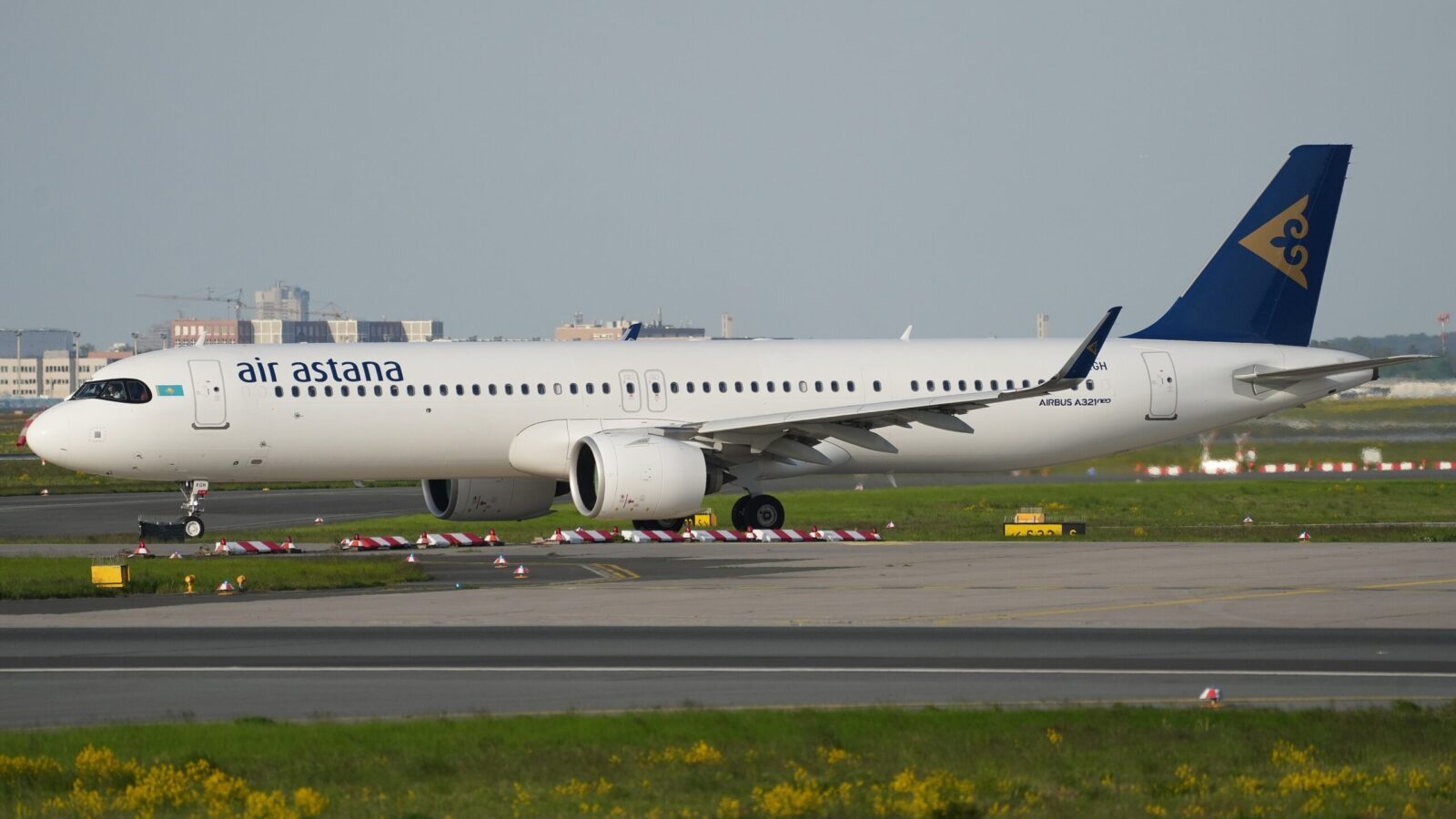
Kazakhstan’s airlines carried 12.4 million passengers in the first nine months of 2026, as the country’s aviation sector expanded its international network and advanced plans for new airport and cargo hubs.
The figure was presented on 16 October by Saltanat Tompiyeva, chair of Kazakhstan’s Civil Aviation Committee, at the eighth International Transport and Logistics Business Forum “New Silk Way” in Astana. The country’s airports handled 136,500 tonnes of cargo during the same period.
The Civil Aviation Committee said Kazakhstan’s international route network now covers 31 countries and 137 destinations. Domestic and foreign airlines have opened 24 new air routes, although the announcement did not list the routes or provide a year-on-year comparison for passenger traffic.
The forum also addressed the country’s longer-term aviation strategy. Kazakhstan is developing a civil aviation master plan through 2050 in cooperation with the International Civil Aviation Organisation.
Astana International Airport’s development strategy through 2035 includes plans for a second runway, expanded cargo infrastructure and further digitalisation. Karaganda Airport is advancing its QarGo Hub concept, with cargo traffic projected to reach 61,000 tonnes this year. An aviation and logistics hub planned for Aktau could attract between US$400 million and US$500 million in investment.
SCAT Airlines presented a programme to develop an aviation hub in Shymkent, comprising 12 investment projects, including aircraft maintenance facilities and airport infrastructure. Vietjet Qazaqstan also proposed measures aimed at improving the affordability of domestic air travel, while national cargo carrier Alatau Air Cargo is preparing to begin operations.
The figures underline Kazakhstan’s efforts to strengthen its position as an air-transport link between Europe and Asia. For tourism, additional connectivity could support city breaks, regional travel and multi-destination Silk Road itineraries, although the announcement focused on aviation and logistics rather than visitor forecasts.