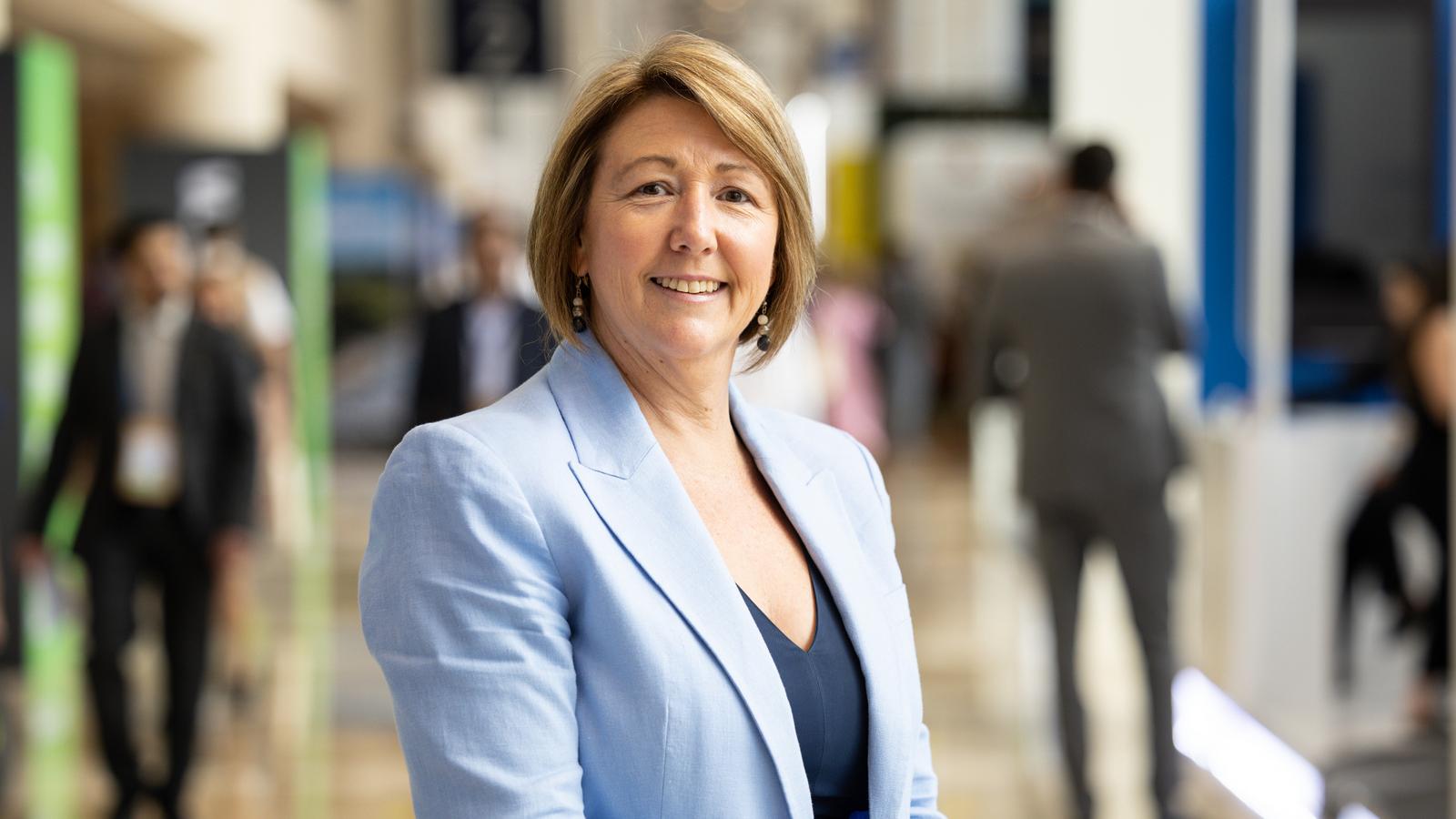
We spoke with Danielle Curtis, Regional Portfolio Director – UAE at RX Global, about the importance of the Arabian Travel Market amidst geopolitical tensions, the resilience of the global travel industry, the growing role of technology and artificial intelligence, and the future of ATM trade shows. She emphasizes that despite the challenges facing the region, the global travel industry remains focused on collaboration, investment, and the pursuit of new growth opportunities.
This year’s edition of Arabian Travel Market takes place under exceptional geopolitical circumstances. How would you describe the strategic importance of holding ATM in Dubai at this particular moment?
At a time when the travel and tourism landscape is undergoing rapid transformation, the ability to bring the global travel community together is more important than ever. Arabian Travel Market demonstrates the resilience and adaptability of our industry, providing a platform for meaningful dialogue, collaboration and business growth when connections matter most.
Dubai is uniquely positioned to host these conversations. As one of the world’s leading tourism and business hubs, it offers unrivalled connectivity, a global outlook, and a proven ability to bring people and ideas together, making it the ideal setting for an event of this scale. ATM showcases the strength and resilience of the travel sector and reinforces the power of collaboration to shape a more sustainable, innovative, and prosperous future for global tourism.
The decision to move Arabian Travel Market to September was closely watched by the global travel industry. What were the main factors and strategic considerations behind that decision, and what did it reveal about crisis management in large-scale international events?
The support we have received from exhibitors, buyers and industry partners throughout this process has highlighted the resilience and collaborative spirit that define the global travel community. Any adjustment to an event of ATM’s scale requires careful consideration, and the positive, solutions-focused engagement from stakeholders has been instrumental in ensuring a smooth transition.
The move to September enables us to continue delivering strong commercial value, high-quality networking opportunities and meaningful knowledge exchange for all participants. It has also reinforced the importance of open communication, trusted partnerships and collective decision-making when navigating change in large-scale international events.
We remain sincerely grateful for the flexibility, understanding and ongoing commitment shown by our customers and partners. We would also like to recognise the invaluable support of our strategic partners, including Dubai World Trade Centre, the Dubai Department of Economy and Tourism, IHG Hotels & Resorts and Al Rais Travel, whose close collaboration has helped maintain momentum and ensure the best possible outcome for the wider industry.
To what extent has the current geopolitical situation in the Middle East influenced the organisation, strategic planning and business conversations taking place at ATM 2026?
Like any major global industry event, ATM operates within the context of broader regional and international developments, and those realities naturally inform conversations taking place across the travel sector. While the fundamentals of travel remain strong, destinations, tourism organisations and businesses are increasingly focused on resilience, adaptability and long-term planning in an evolving global environment.
As a result, many of the discussions at ATM 2026 will explore how the industry can respond to changing market dynamics, strengthen partnerships, and continue to drive sustainable growth. Rather than slowing progress, these conversations are reinforcing the importance of collaboration, innovation and knowledge sharing. ATM’s role is to provide a platform where industry leaders can come together, exchange perspectives and identify opportunities that will help shape a more resilient and connected future for global travel.
Did exhibitors, hosted buyers or international partners express concerns regarding participation ahead of the event? If so, how were these concerns addressed?
As with any major international event, our exhibitors, hosted buyers and partners naturally sought clarity on how ATM 2026 would continue to deliver maximum value for their businesses. The most important thing was maintaining an open, ongoing dialogue with the industry, listening carefully to feedback, and understanding what would best support participation and commercial outcomes.
The decision to move ATM 2026 to September was a direct result of those conversations. By working closely with stakeholders and responding proactively to their needs, we created a framework that gives participants greater flexibility and confidence in their planning.
Overall, the response has been positive, with many viewing the move as a reflection of ATM’s commitment to partnership and its ability to adapt in the industry’s best interests. What we’re seeing now is a strong sense of momentum, with conversations focused less on uncertainty and more on growth, innovation and the opportunities shaping the future of global travel.
How would you assess the current sentiment among global travel industry stakeholders towards doing business and investing in the region today?
The region continues to be recognised as one of the most dynamic and forward-looking travel markets in the world, driven by ambitious tourism strategies, significant infrastructure investment and a strong commitment to innovation. From aviation and hospitality to destination development and travel technology, stakeholders see substantial opportunities for long-term growth and collaboration across the region.
This confidence is also reflected in recent international government travel advice. The UK government has lifted its advisory against all but essential travel to the UAE, while Australia has downgraded its travel warnings for several Middle Eastern destinations, including the UAE. These developments provide further reassurance for travellers, businesses and investors, reinforcing confidence in the region’s stability, connectivity and ability to welcome international visitors and events.
What is particularly striking is the level of confidence in the Middle East’s ability to shape the future of global tourism. Countries across the region are investing in tourism at scale and redefining what modern travel experiences can look like through sustainability, digital transformation and world-class visitor experiences. As a result, conversations at ATM 2026 are increasingly centred on partnership, investment and innovation, reflecting a shared belief that the Middle East will continue to play a pivotal role in the evolution of the global travel industry.
Would you say the strong exhibitor and visitor turnout this year reflects confidence in the resilience of Dubai and the wider regional tourism economy?
While it’s too early to draw conclusions based solely on attendance figures, the level of engagement and interest we continue to see from exhibitors, buyers and industry partners is certainly encouraging. At ATM, our focus has never been solely on the number of participants but on the quality of the connections, conversations, and business opportunities the event creates.
What we are seeing is a strong commitment from the global travel community to come together, share insights and explore new opportunities across the region and beyond. The continued support for ATM reflects confidence in Dubai’s role as a global tourism and business hub, as well as the wider Middle East’s long-term growth potential. More importantly, it underscores the value of having a trusted platform where industry leaders can engage in meaningful dialogue, build strategic partnerships and help shape the future of travel and tourism.
How important is Dubai’s reputation as a stable international business and tourism hub in maintaining confidence among global industry stakeholders despite regional tensions?
Dubai’s reputation as a stable, globally connected business and tourism hub is a key factor in maintaining confidence among international stakeholders. Over many years, the city has built a strong track record of reliability, supported by world-class infrastructure, exceptional air connectivity and a business-friendly environment that enables organisations to plan and invest with confidence.
Equally important is the UAE’s proven ability to host major international events year-round and bring together global audiences. Combined with its strategic location linking Europe, Asia and Africa, this has helped establish Dubai as a trusted platform for business, tourism and industry collaboration. Ultimately, confidence is built through consistency, and Dubai continues to demonstrate its ability to connect people, markets and opportunities on a global scale.
Security, operational continuity and crisis preparedness have become increasingly important for international events. What concrete measures have been implemented to ensure participant safety and business continuity during ATM?
Participant safety and operational continuity remain fundamental priorities for ATM, and these considerations are embedded into every stage of our planning process. We take a proactive approach to risk management, continuously monitoring developments and maintaining close coordination with venue partners, local authorities and key stakeholders to ensure we can respond quickly and effectively to any changing circumstances.
Our contingency planning framework is designed to address a range of potential scenarios, with robust measures in place to support business continuity while maintaining the highest standards of safety and event delivery. Importantly, this is not a standalone exercise but an ongoing process of assessment, communication and preparedness.
By combining comprehensive planning with strong local partnerships and Dubai’s world-class event infrastructure, we can provide exhibitors, buyers and visitors with confidence that ATM will continue to deliver a safe, seamless and productive experience.
How closely are you working with Dubai authorities and international partners on security assessment, contingency planning and monitoring regional risks?
We work closely with our strategic partners, including Dubai World Trade Centre, the Dubai Department of Economy and Tourism, IHG Hotels & Resorts, and Al Rais Travel, as well as relevant authorities and stakeholders, to ensure that all aspects of event delivery align with the highest standards of safety, operational readiness, and customer experience.
This is an ongoing process rather than a one-time assessment. We maintain regular communication with our partners to monitor developments, review plans and ensure we are well-positioned to respond to any evolving circumstances. Our approach is built on preparedness, flexibility and shared responsibility, with contingency planning embedded across all areas of the event.
One of Dubai’s greatest strengths as a host destination is its proven ability to successfully deliver large-scale international events through strong public-private collaboration and world-class infrastructure. That close coordination provides a solid foundation for ATM, giving exhibitors, buyers, speakers and visitors confidence that the event is supported by experienced partners, robust planning frameworks and a commitment to ensuring a safe, seamless and productive experience for all participants.
Has the recent regional instability changed the way large-scale tourism and business events need to be organised in the future? Do you believe geopolitical risk management is now becoming as important as commercial strategy?
The events industry has always had to adapt to a changing global landscape, and one of the key lessons in recent years has been the importance of building resilience and flexibility into every aspect of event planning. Today, successful large-scale events require strong commercial strategy and planning frameworks that enable organisers to respond effectively to evolving circumstances while continuing to deliver value for participants.
What we are seeing across the industry is a growing emphasis on resilience as a competitive advantage. The events that will succeed in the future are those that can combine innovation, business opportunity and exceptional experiences with the agility and foresight needed to navigate an increasingly complex world.
What message would you like to send to companies and international stakeholders that may still be hesitant about attending or investing in events in the Middle East at this time?
Our message is simple: the opportunities remain strong, and the value of coming together has never been greater. Arabian Travel Market continues to be one of the world’s leading travel trade platforms, bringing together decision-makers, buyers, destinations and industry leaders from across the globe.
The strong support we continue to see from exhibitors, partners and visitors reflects confidence in ATM and the region’s long-term growth potential. We look forward to welcoming the global travel community to Dubai in September to connect, collaborate and help shape the future of travel together.
What makes Arabian Travel Market one of the most important global meeting points for the travel and tourism industry today?
ATM sits at the crossroads of some of the world’s fastest-growing travel markets, bringing together senior decision-makers, buyers, destinations, hospitality brands, airlines and innovators from across the global tourism ecosystem. More than an exhibition, ATM is a platform where business gets done, partnerships are formed, and the future of travel is shaped.
Its unique combination of international reach, high-quality networking, industry-leading insights and focus on innovation makes ATM one of the most influential meeting points for the global travel and tourism industry today.
How significant is ATM’s role in facilitating cross-border partnerships, investment discussions and long-term strategic alliances across the global tourism sector?
ATM plays a vital role in bringing together the global travel ecosystem under one roof. By connecting destinations, tourism boards, airlines, hospitality brands, technology providers, investors and buyers from around the world, the event creates opportunities for meaningful partnerships, investment conversations and long-term collaboration.
Many of the industry’s most important relationships begin through face-to-face engagement, and ATM provides the platform where ideas, opportunities and strategic alliances can be transformed into tangible business outcomes that support the future growth of global tourism.
What new opportunities can exhibitors, buyers and hosted delegates expect from this year’s B2B meetings programme and networking formats?
Building on the success of previous editions, ATM 2026 will continue to provide exhibitors, buyers and hosted delegates with highly targeted opportunities to connect, collaborate and do business. Through platforms such as ATM Meet, participants can efficiently schedule pre-arranged meetings with relevant partners, helping to maximise both time and commercial outcomes.
How is ATM adapting its networking, matchmaking and business engagement formats to meet the expectations of a more digital, data-driven and AI-enabled travel industry?
The way business relationships are formed is evolving, and ATM is evolving with it. Today’s travel industry expects more personalised, efficient and insight-led engagement, which is why we continue to enhance the event experience through a combination of technology, data and curated networking opportunities.
Beyond facilitating introductions, ATM is creating environments where the right conversations can happen more naturally, whether through specialist forums, focused networking sessions, knowledge-sharing platforms or innovation-led experiences. The goal is to help participants move beyond transactional meetings and build the strategic relationships, partnerships and ideas that will shape the future of travel.
Which tourism sectors are currently showing the strongest growth momentum among exhibitors and investors participating at ATM this year?
We are witnessing particularly strong momentum across travel technology, hospitality, aviation, luxury travel and destinations and tourism boards. These sectors continue to invest heavily in innovation, strategic partnerships and international expansion, reflecting robust confidence in the long-term growth and resilience of the global tourism industry.
At the same time, emerging areas such as AI-powered travel solutions, smart mobility and wellness tourism are gaining traction as the industry evolves to meet changing traveller expectations. This growing demand for technology-driven solutions is one of the key reasons behind the introduction of the co-located ATM Travel Tech event, providing a dedicated platform to showcase the innovations shaping the future of travel.
Together, these developments highlight a sector that is embracing transformation and prioritising greater connectivity, personalisation and sustainable growth across the wider travel ecosystem.
Are traditional growth drivers such as luxury travel, aviation, hospitality and MICE continuing to dominate, or are new emerging segments gaining prominence?
Traditional growth drivers such as aviation, hospitality, luxury travel and MICE remain the foundation of the global tourism industry and continue to generate significant investment, innovation and demand. These sectors are evolving rapidly and remain central to many of the conversations and business opportunities taking place at ATM.
At the same time, we are seeing the emergence of new growth areas that are reshaping the industry landscape. Travel technology, AI, digital payments, smart mobility, immersive experiences, and sustainable tourism solutions are becoming increasingly influential not as standalone segments but as powerful enablers of future growth across the entire travel ecosystem. This is reflected in the introduction of ATM Travel Tech as a co-located show and the launch of the Tech & Innovation Hub, which highlights the growing convergence between travel and technology.
What is particularly interesting is that the industry’s future will be defined by the intersection of these established sectors and emerging innovations. The most successful organisations will be those that combine the strength of traditional tourism assets with new technologies and business models to create more seamless, personalised and sustainable travel experiences.
What are the key themes and trends dominating executive-level discussions across this year’s conference and seminar programme?
Under the theme Travel 2040: Driving New Frontiers Through Innovation and Technology, this year’s conference programme will focus on the trends, technologies and strategies shaping the future of global tourism. Key discussions will explore the growing impact of AI, travel technology, smart mobility, digital transformation and innovation, as well as the opportunities these developments are creating for destinations, businesses and travellers alike.
In addition, at the Global Stage, Future Stage and Experience Hub, industry leaders will share insights on navigating change, responding to shifting traveller expectations, strengthening partnerships and building more agile tourism businesses.
The programme will feature a diverse lineup of global experts, including Dr. Marwan Al Zarouni, CEO of AI at Dubai Department of Economy and Tourism; Jeremy Jauncey, Founder and CEO of Beautiful Destinations; Nick Kwek, BBC presenter and journalist; Sienna Parulis-Cook, Director of Marketing and Communications at Dragon Trail International; and Virendra Jain, Founder of Videc. Together, they will provide valuable perspectives on the future of travel, technology and destination growth.
How rapidly are AI and travel technology transforming the business models and strategic priorities of tourism companies represented at ATM?
AI and travel technology are transforming the tourism industry at an unprecedented pace, reshaping everything from customer engagement and personalisation to revenue management, operations and strategic decision-making. Across ATM and the wider industry, we are seeing strong demand from destinations, travel brands and hospitality providers for technologies that enhance efficiency, unlock new revenue streams and elevate the traveller experience.
The launch of ATM Travel Tech as a dedicated co-located event, alongside the introduction of the Tech & Innovation Hub, is a direct response to this growing demand. As technology becomes increasingly integral to business success, ATM is expanding its innovation offering to create a platform where industry leaders can discover emerging solutions, gain actionable insights and connect with the innovators driving the future of travel.
These initiatives reflect a broader industry shift, with technology evolving from a supporting function into a strategic driver of competitiveness, growth and long-term resilience.
In an increasingly digital business environment, why do face-to-face industry events like ATM remain so important?
Technology has undoubtedly made it easier to connect, communicate and do business across borders, but there is still no substitute for meeting people face-to-face. In an industry built on relationships, trust, and collaboration, events like ATM provide a unique environment where meaningful conversations can happen, partnerships can be formed, and ideas can be exchanged in ways that simply aren’t possible online.
What makes ATM particularly valuable is that it brings together the entire travel ecosystem in one place – from destinations and airlines to hotels, technology providers and industry leaders. While digital tools help keep conversations going year-round, face-to-face events remain where many of the most important business decisions are made, new opportunities are uncovered, and lasting connections are built.
Would you say this year’s edition of ATM is not only a business event, but also a symbol of resilience, confidence and international cooperation for the travel industry?
While ATM is first and foremost a business event, I believe it also represents something much bigger for the travel industry. Every year, it brings together people from different countries, cultures and sectors who share a common goal: to strengthen connections, create opportunities and drive the industry forward.
In a world that continues to navigate economic, geopolitical and operational challenges, the willingness of organisations from around the world to come together, invest in partnerships and plan for the future sends a very positive message. It reflects the resilience of the travel sector, the confidence businesses have in continued growth, and the importance of international collaboration in shaping the future of tourism.
When industry leaders, destinations and travel brands gather at ATM this September, I expect a strong sense of optimism, collaboration and momentum. That spirit is one of the reasons ATM continues to be such an important event for the global travel community.
Can the travel and tourism industry play a broader role in strengthening dialogue, cooperation and economic connectivity during periods of geopolitical uncertainty?
I believe it can, and in many ways it already does. Travel has always been about bringing people, cultures and communities together. Even during periods of geopolitical uncertainty, tourism creates opportunities for dialogue, understanding and collaboration that extend well beyond the industry itself.
The sector also plays a vital economic role, supporting jobs, investment and cross-border business partnerships. When destinations remain connected, and businesses continue to engage with one another, it helps maintain important economic and cultural links at a time when those connections matter most.
While travel cannot solve geopolitical challenges, it can help build bridges between people and nations. That ability to foster understanding, encourage cooperation and create shared economic opportunities is one of the reasons tourism remains such a powerful force globally.
Looking beyond this year, what is your long-term vision for Arabian Travel Market as the global travel industry enters a more volatile and rapidly changing geopolitical era?
If there’s one lesson I’ve taken from leading ATM over the years, it’s that the travel industry is remarkably resilient. It continues to adapt, innovate and find new opportunities, even in the face of significant global challenges.
Looking ahead, my vision for ATM is for it to remain much more than a trade event. I want it to continue serving as a platform where the global travel community comes together to share ideas, build partnerships and navigate change collectively. As the industry evolves, ATM must evolve with it – reflecting the key trends shaping travel, whether that’s technology, sustainability, changing traveller expectations or new market dynamics.
In an increasingly complex world, the need for trusted platforms that bring people together will only grow. My ambition is for ATM to continue providing that space for meaningful dialogue, collaboration and business growth, while helping the industry remain agile, connected and prepared for whatever comes next.
Finally, what would success look like for Arabian Travel Market 2026 under these extraordinary circumstances?
Success for ATM 2026 will certainly be measured by strong participation, meaningful business outcomes and the quality of conversations taking place across the event. However, given the circumstances, I think success goes beyond the traditional metrics.
For me, success would be seeing the global travel community come together with a sense of confidence and purpose, continuing to invest in partnerships, share knowledge and explore new opportunities despite the challenges around them. It would be seeing destinations, travel brands and industry leaders looking forward rather than standing still.
Having worked in this industry for many years, I have seen time and again that travel has an extraordinary ability to adapt, recover and bring people together. If ATM 2026 can help foster new partnerships, spark fresh ideas and reinforce the optimism that continues to drive our industry forward, then I would consider that a tremendous success.
Ultimately, success will be measured by what happens during the event and by the connections, opportunities and momentum it creates long after the doors close.
Arabian Travel Market 2026
14-17 September 2026 – DWTC Dubai, UAE
www.wtm.com/atm/