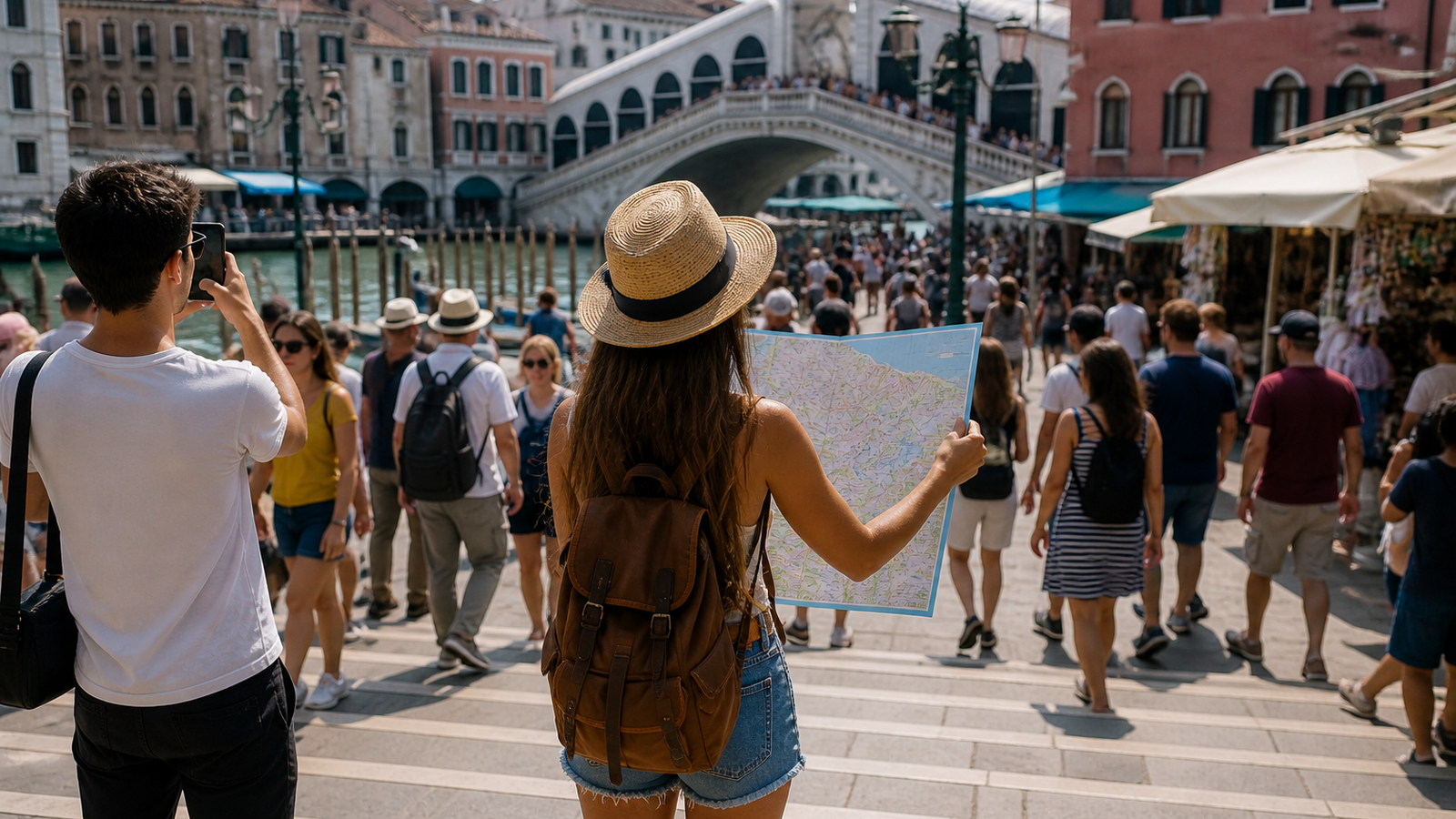
 A growing body of research points to the so-called “tourist syndrome” – a phenomenon where people behave more impulsively and break everyday norms while traveling. A study conducted by Radical Storage, a global luggage storage platform operating in over 1,000 locations worldwide, surveyed more than 1,200 travelers and confirmed this trend.
According to the findings, over 56% of respondents admitted that they do things on vacation they would not normally do in their daily lives. The effect is particularly strong among younger travelers – in the Gen Z group, more than 70% acknowledged engaging in “tourist misbehavior.”
Experts explain that this shift is driven by a sense of anonymity and freedom away from home. Without the usual social constraints, travelers often feel less accountable, treating their destination as a temporary space where rules are more flexible. This can range from minor breaches of etiquette, such as ignoring local customs, to more serious misconduct in public spaces, transport, or tourist facilities.
“Tourist syndrome” highlights that travel is not only about relaxation and exploration, but also a psychological experience. It allows individuals to express behaviors and traits that remain hidden in everyday life.
Understanding this mechanism may help both travelers and destinations. For tourists, it encourages more conscious and responsible behavior. For cities and the tourism industry, it offers insight into managing visitor conduct and promoting respectful travel practices.