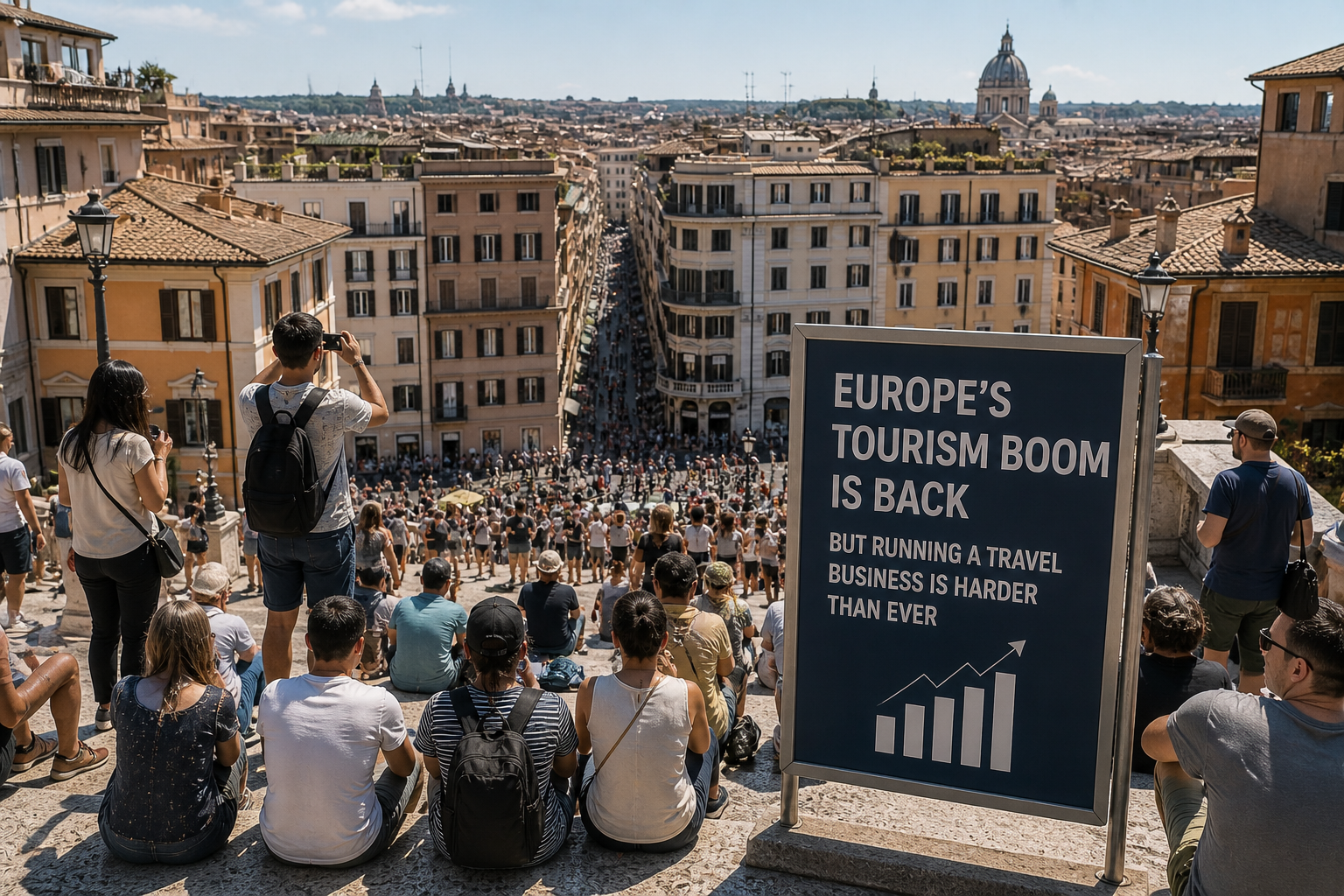
Tourism across Europe is rebounding strongly, with visitor numbers approaching or even surpassing pre-pandemic levels. Major cities and popular destinations are once again filled with travelers, confirming that demand for international travel remains high.
However, behind this recovery lies a more complex reality for businesses operating in the sector. Travel companies, hotels, and tour operators are facing increasing operational challenges, making it harder to turn high demand into sustainable profits.
One of the key issues is rising costs. Energy prices, wages, and operational expenses have increased significantly, putting pressure on margins. At the same time, businesses continue to struggle with labor shortages, particularly in hospitality and service roles.
Changing traveler expectations are adding another layer of difficulty. Tourists now expect more personalized, flexible, and high-quality experiences, often at competitive prices. This forces companies to invest more in technology, staff training, and service innovation.
Additionally, regulatory pressures and sustainability requirements are becoming more demanding. Businesses must adapt to environmental standards and responsible tourism practices, which often require further investment.
As a result, Europe’s tourism sector is entering a new phase—one defined not only by growth, but also by complexity. While the demand side looks strong, the ability to manage costs, workforce challenges, and evolving expectations will determine which companies succeed in the long term.